It doesn’t matter where you turn, something is being blamed for Western society’s obesity epidemic. Whether it’s the dietary fat culling, or the sugar purge, some specific type of food is to blame.
But what if it were far simpler? What if no food could influence the law of thermodynamics? Is it true that as a society we simply eat too much?
Well, as we all search for “the truth” on nutritional science hoping to find a cure to our love handles, copious amounts of information gets thrown into the pit of our short term memory. We are bombarded with fitness influencers telling us to intermittent fast to “quicken our metabolism” or to drink lemon water to “detox the body and promote fat loss”.
But unfortunately when it comes to the laws of fat loss, one physical law cannot be overlooked. This is what the British physicist William Thomson coined the law of thermodynamics, or in other words, calories. Most of us understand that calories are small bundles of energy that our body metabolises to help us move, breathe, and live. Without this energy, our body would be compromised, compelling our brain to search deep for alternative sources of survival.
As humans we are inherently designed to consume energy from food to survive. Our bodies were originally created to only crave what they need, and to find substances “tasty” until they do not need any more energy. However, since the end of the 1960s consumer spending and demand for goods and services have not stopped rising. This demographic shift caused economic expansion in practically every single infrastructure that exists to date, especially in the food industry.
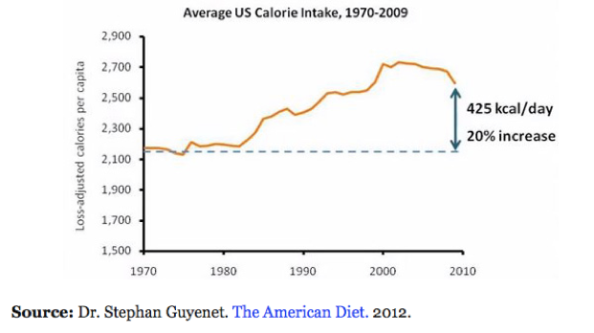
At the start of this era, the average American consumed 2160 calories a day from practically unprocessed, whole foods. This included a diet consisting of a high meat intake, home cooked meals, and a culture built around familial relations. But, if we look at the most recent data, the average American eats 2673 calories, a whopping 425 k/cal, or 20% increase. Not only this, but one study found that the average American now consumes 60% of their daily calories from ultra-processed “food”. That’s 1600 calories, or about what the average woman was told to eat back in the 1960s.
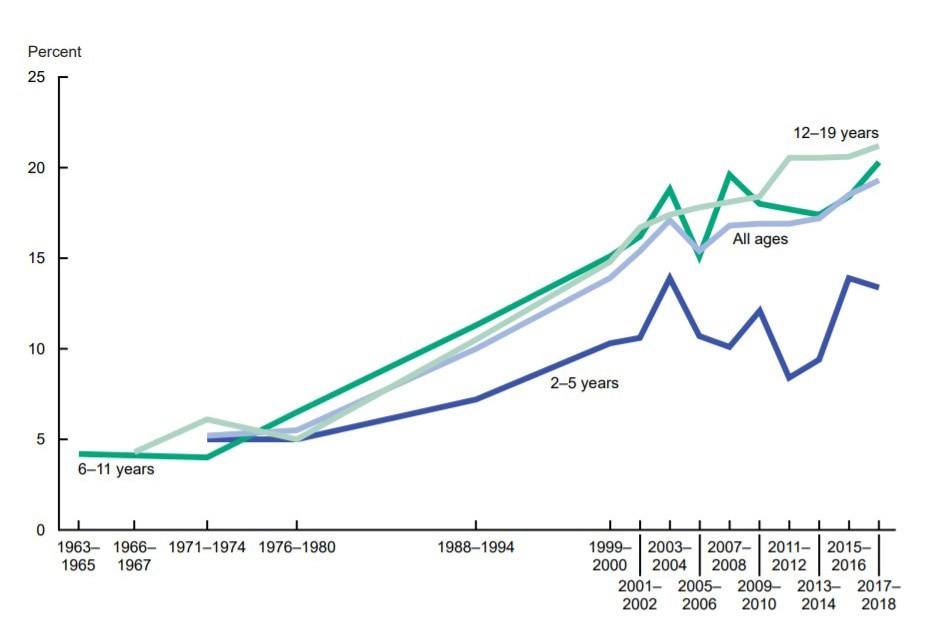
Since this time, obesity has not only been on a steep rise, but all cardiovascular diseases, diabetes, non-alcoholic fatty liver disease, cancers, sleep apnea, osteoarthritis, and ALL mental health disorders. This response means that alongside the extremely poor diet our society has created, there has been a corresponding rise in the prevalence of many other serious, and life threatening health conditions. It suggests to us that obesity is a serious risk factor for these health issues and underscores the importance of addressing it as a public health crisis.
From the outside, there looks to be a very obvious solution to this. Surely if we tell people to simply consume less calories a day and eat better, then this is solved. Personally, I really wish it were that simple. But unfortunately, we live in a world where most of our “science” has been paid for by the same companies that caused crisis. Don’t believe me?
158 out of 246 of members on the British national committee of nutrition and food policy have received funding from food companies.
In 2001, the Journal of Nutrition listed 11 food and drug companies as sustaining associates of its parent society
The American Journal of Clinical Nutrition listed 28 such companies
The New England Journal of Medicine and The Journal of the American Medical Association each receive $20 million annually from drug companies
The Journal of the American Dietician Association received $3 million in advertising from food and drug companies in 1999
1996 survey found nearly 30% of university faculties accept industry funding
Another survey found 34% of primary research authors have shares in companies that benefit from their research
The American Heart Foundation had partnerships with food companies that reached $1 million each
The American Dietician Association accepted donations for food companies to be involved in the education of their nutritions, with 8% of their income coming from such
These points are just a drop in the ocean when it comes to the data. I truly believe there could be hundreds, if not thousands of cases where a conflict of interest on food companies could’ve been legally argued. Nevertheless, we must try and sift through the pseudoscience, and find data that is grounded in reality.
As a society, we must start promoting self education on nutrition, foster the critical thinking of our youths and those affected by this crisis. These are the essential steps to start solving our public health concern. It is extremely unfortunate, but we can no longer rely on our education system, or our government, to drag this health concern from a whole they dug. The only way out is to encourage and motivate people trapped in a vicious cycle of extremely psychologically appealing marketing tactics, and advocate for full transparency in research funding and policy making.
Ultimately, battling obesity is a individual fight that ends in one of two ways: succumbing to the cycle of unhealthy habits and limited life span, or taking control of one’s health through education, reform, and a sheer amount of discipline. We must help those who are trying to break free from the grip of disinformation and commercial interests, and in turn, pave the way for a healthier future.
 Vitality Blueprint
Leave a comment