
Since the USDA records began on sugar and obesity intake (1980), a positive correlation between the two was seen. But, just before the new millennia, this relationship just stopped. Between the years 1980 and 1998, both increased by about 15%, but after, obesity kept climbing, and sugar consumption tanked, leaving us with a negative correlation.
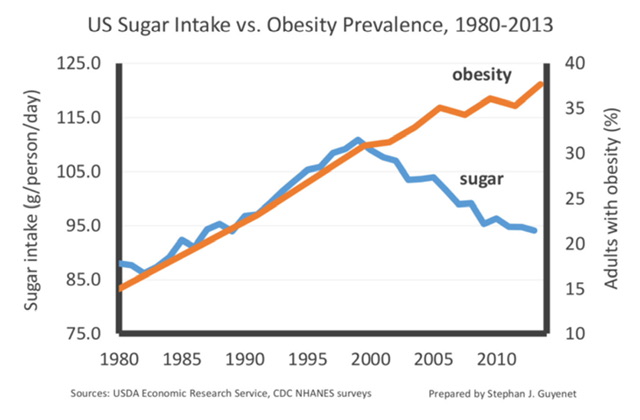
From everything we’ve been told about sugar being the enemy, and a cause of obesity, it is completely surprising to most people who see this data. However, when we look back to the mid-1990s, the USDA put more pressure on consumers to drop sugar intake because of a step obesity rise. But, from the data we have now, we can see this reform made no difference at all. So, what has caused this continued climb in obesity, if it is not sugar?
Well, some blame calories as it is far easier to overconsume on our Western diets, especially with the influx of processed snacks, takeaways, and highly sedentary jobs. However, this may not be the case as most sources claim that after the mid-1990s, the same era as the sugar reformation, our calorie consumption started steadily dropping. So, we also see a negative correlation between calorie intake and obesity post-millennia.
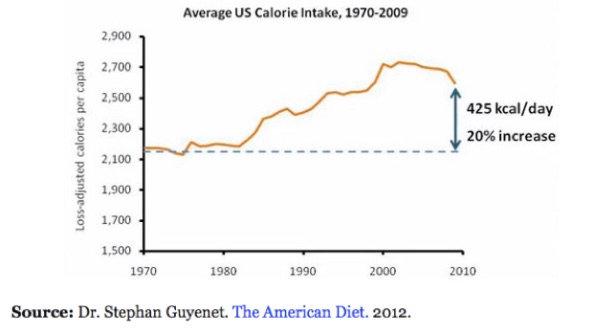
Therefore, if it cannot be the sugar or even the calories, it must be the energy expended. Obesity, or fat mass gain, can only be attributed to too many calories eaten, and not enough expended right?
Well, the CDC claims that people in the US are more active on average than they were 20 years ago. Also, other studies have suggested that people are getting fitter, no matter what age. For example, take this VO2 Max graph that shows individuals’ lung capacity have increased since 1970 for all age groups.
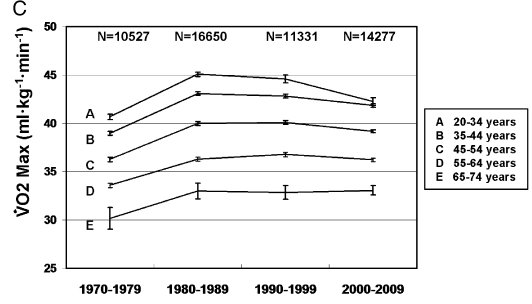
Unfortunately, finding exact statistics on energy expended throughout the last 50 years is difficult because we still don’t have 100% accurate measurements readily available to this day, especially not pre-millennia. However, from the data available, the fact that people are getting fitter, and exercising more, we can assume energy expenditure has not decreased.
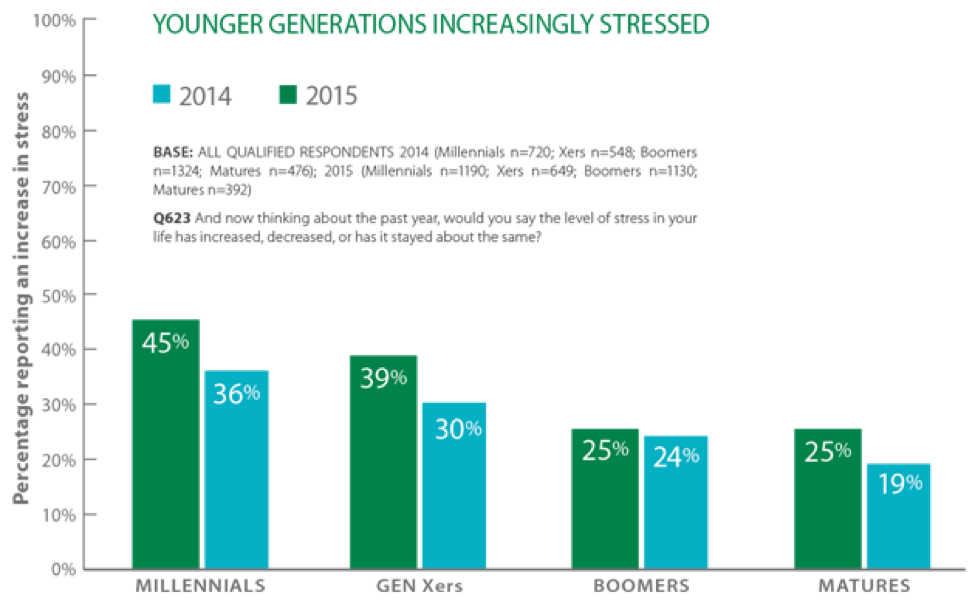
So, what other factors can we look at to find a cause for this obesity crisis? Well, there are stress levels, which we know have increased dramatically since 2000. High stress levels cause the hormone cortisol to formulate, which, from our current knowledge suggests that the formation of adipose tissue is quicker with higher levels in the blood. This resistance can lead to a constant elevated blood sugar level, and therefore, inhibition of lipolysis (breaking down fat storage). Furthermore, this stress does not have to be mental. It can also come from physical stress like injuries, or even metabolic stress like IBS.
Finally, another factor we know to have significantly increased is ‘seed oil’ consumption. These oils, originally created as machinery lubricants, now are the backbone of about 95% of all multicomponent foods. Some research claims there to be no issues surrounding seed oils, but most of this data just looks into the omega 3/6/9 ratios, and not its effect on the gut, and hormone production.
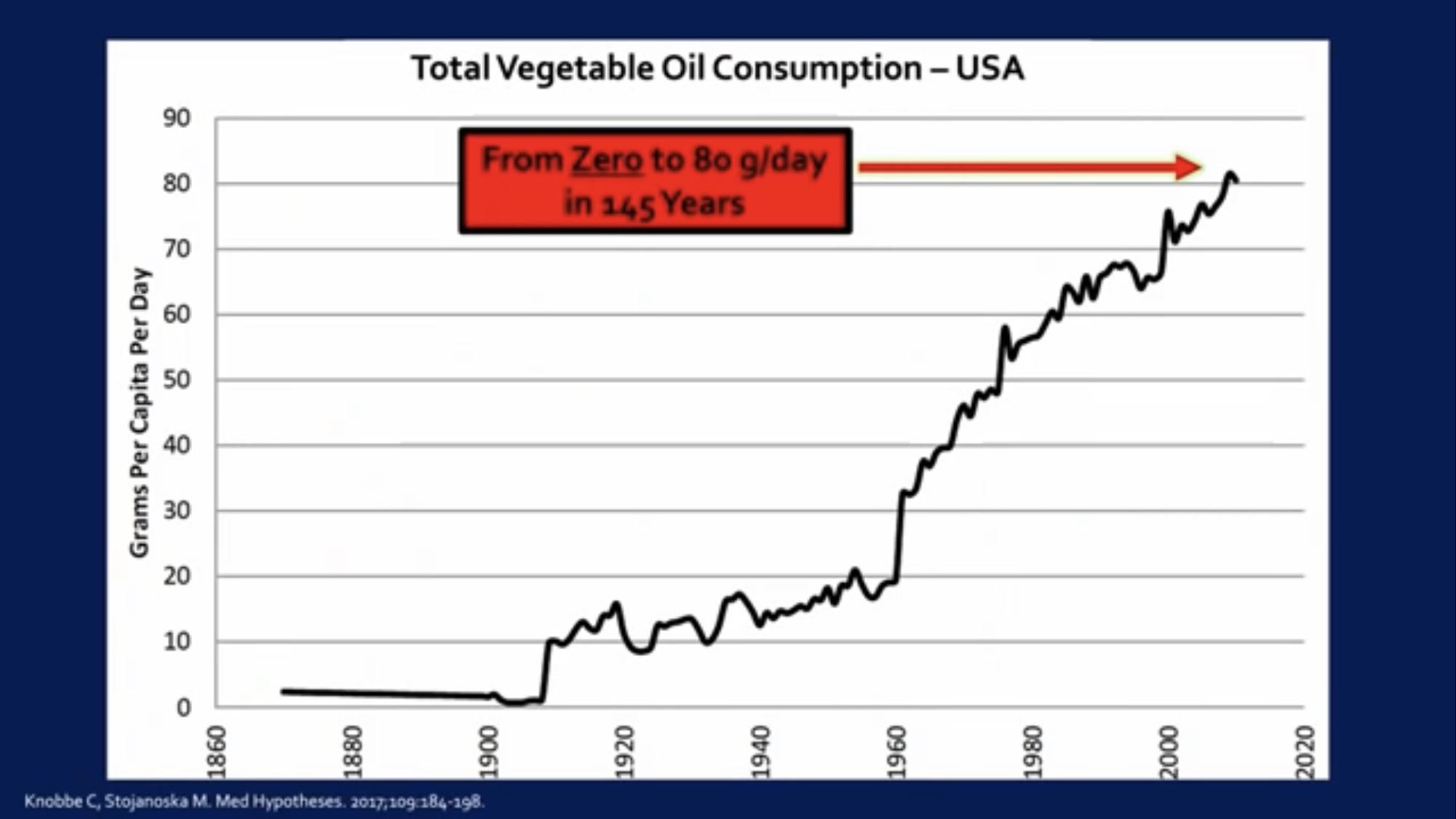
When you look into how seed oils affect the gut, one factor attributing to the obesity epidemic shows.
There are 8 common industrial seed oils. These are canola, corn, soy, sunflower, cottonseed, safflower, grapeseed, and rice bran. During processing, the seeds themselves are heated to extremely high temperatures to oxidise the fatty acids. The process of oxidisation leads to ROS within the body. Put simply, the body has an antioxidant system to protect cell signalling and gene expression. When there is an overproduction of ROS, processes called lipid peroxidation and protein oxidation take place which cause dysregulation and function of specific enzymes and receptors.
This, in turn, can lead to fat mass storage from mitochondrial dysfunction, as the regulation of lipolysis is impaired. Also, this oxidative stress influences the composition of our gut bacteria, further impairing metabolic function.
For this reason, when people say these oils are safe because they only produce linoleic acid, which also occurs with the consumption of chicken breast and minced meat, they ignore the main complaint anti-seed oil advocates have.
Discussion
These evolving factors within the obesity epidemic show that a complete reevaluation of dietary guidelines and public health strategies is needed. While the focus is currently on sugar and calorie reduction alongside increasing exercise, it has not worked. Other factors have been missed contributing to the rising rates of adiposity.
Our society needs a complete overhaul of government task forces involved with reviewing dietary guidelines. This task force needs to comprise unbiased nutritionists, public health experts, policymakers, and the general population’s voice. A complete analysis of comprehensive data sets, including longitudinal studies tracking dietary culture across the world, obesity rates, and metabolic health markers is needed. Until this evidence is collected, we cannot expect our society’s obesity rates to drop. We can assume the number will keep on rising until such impartiality is guaranteed.
Some examples of the factors that need to be re-evaluated:
Stress level proliferation
Seed oil consumption
Exercise intensity across generations
Physical and nutritional education in school
False claims about unprocessed meat’s danger
The impact of cholesterol from the diet
Empty calorie consumption
Metabolic health markers from different diets
Alcohol
Food industry ill practices
Public health initiatives
Industry-funded research papers
 Vitality Blueprint
Leave a comment