On July 29, 2024, Southport, a small Merseyside town, felt the uproar after a young man killed three young girls and injured ten, in Britain’s worst mass stabbing in years. The perpetrator, now named Axel Muganwa Rudakubana, is a 17-year-old 2nd generation Rwandan migrant who isn’t new to knife crime. From being expelled from his local school for carrying a knife, and threatening his classmates, he was not new to violent conduct.
After such a tragedy we should’ve seen the British people coming together, mourning the death of their own, and repeating the talking points on knife crime. But instead, we received the ethnically British protesting anti-mass immigration, the non-ethnically British protesting them, a prime minister without a clue and the legacy media portraying anyone who disagrees as “a far-right extremist” or labelling them as “fascists”.
This division, and the ensuing protests, both violent and non-violent, have dominated conversation. But, as with everything, violence is what receives the attention. For example, BBC, Sky, The Guardian, Reuters, and The Independent have all written similar articles labelling these protestors as “far-right”. Why? Well, some would say it is because all these protestors are part of the far-right ideology, but this is completely ridiculous. Others might suggest it is due to the rampant Islamophobia across Britain, but this is also falsifiable. This is because of the uncontrolled identity politics our society has bred.
We are seeing just how angry this nation is for living with the government’s 20 years of failures. Labour was meant to be different. But, as expected, we received political pawns, playing identity politics with its population, hoping that they’ll stay docile while everything they voted for is ignored. This, to me, is what these protests display. They are not of the “far right”, they are desperate people asking for accountability and real change. I’m sure if you interview some of the protestors, they will have views that align with extremist movements, but the majority, just want to see their kids grow up in a safe neighbourhood.
The same can be said for the pro-Palestinian movement. Agree with or not, most of these individuals will not be part of Antifa. Most, just like the current anti-immigration protests, want to feel safe and push their despair onto an external source. They are often driven by genuine concern for their communities, desiring stability and safety for those around them. Now, to me, this does not sound like a movement of the far left. And, as I have said, this form of identity politics should not be pushed onto the anti-mass immigration protests. No matter where you go, there will always be bad people, and unfortunately, these violent individuals are the ones who make the news, and make every movement suggest negative consequences.
This can be seen with the BLM riots of 2020. The constant looting and violence gave an awful name to the individuals who sat at a vigil mourning the death of their community.
The government’s failures to address underlying issues of knife crime, illegal immigration, lack of free speech, wrong migration, and the growth of violence-prone cultures should be our main concern. It should not be blaming all of Islam, or the “EDL” (which was disbanded over a decade ago anyway). As a nation, we need to hold our politicians accountable for encouraging the media to cause mass hysteria and identity politics, and for ignoring the needs of the British people.
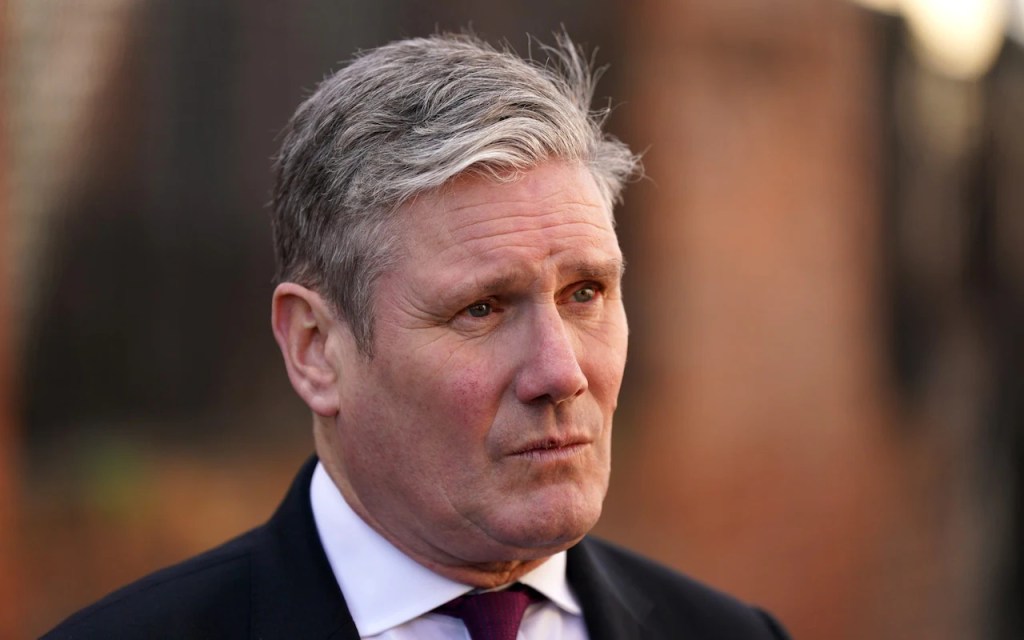
Unfortunately, this is one of the concerns I have with Keir Starmer. He is known to love belittling the issues of the right and to demonising their actions. Agree with his politics or not, he is one of the worst speakers I have seen take office.
Playing identity politics only causes more trouble. Once you demonise the other side, the conversation stops, and once the conversation stops, violence erupts. Look at every single civil war in the modern era. Each one has the opposite party demonise their own. This culture of belittling is dangerous and should never be encouraged, especially by our leader.
Ultimately, the tragic events in Southport and the subsequent protests reveal how deeply divided we are as a society. Our government’s wanting to focus on identity politics, instead of facing the issue head-on only exacerbates these divisions. We, as a democratic, peaceful community must unify and address the real issues at hand without resorting to blame and demonisation. Only then can we hope to prevent such tragedies and build a more cohesive society that resembles what Britain should be.
 Vitality Blueprint
Leave a comment