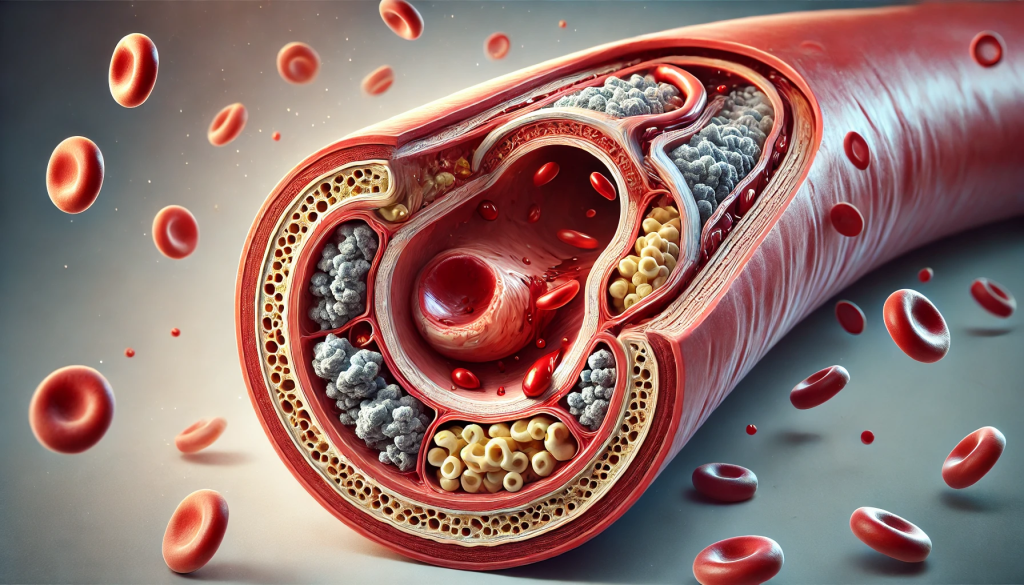
Cholesterol, the most demonised substance to exist, is in fact, one of the most vital components of the human body. It is currently blamed for many cardiovascular diseases, cancers, strokes, and even dementia cases. But I’m here to tell almost everything you think you know about it is wrong. No, cholesterol will not cause heart disease, it is not individually correlated with atherosclerosis, and it has nothing to do with cancer.
Let’s start from the beginning. What is cholesterol? It is a carbon-based molecule, like carbohydrates (carbon + hydrogen), hormones, and antioxidants. This waxy, fat-like substance is present within every cell of the human body, playing a crucial role in numerous bodily functions, far beyond its misunderstood reputation. For example, it’s a key component in the structure of cell membranes, allowing cells to maintain their integrity and fluidity, making it indispensable to life. Additionally, cholesterol is the precursor for the synthesis of vital hormones, including cortisol, testosterone and estrogen, not only regulating most physiological processes but also maintaining homeostasis.
There is the claim that cholesterol exists in two parts, “good” and “bad”. However, there exists only one “type” as it is just a singular molecule. But it comes in two “forms”, non-esterified and esterified. Simply put, whether the cholesterol molecule is attached to a fatty acid, or if it is free to move (not bonded). As it only exists in these “forms”, it has nothing to do with its normative classification
But, from what we’ve been told, cholesterol does have two types. A “good” and a “bad”, so surely, I’m just misrepresenting true scientific studies? Well, there are many types of lipoproteins, but not cholesterol. Lipoproteins, cholesterol’s taxicab, get their name from their structure, just like most molecules. Their role is to transport lipids (triglycerides and cholesterol) through the blood and into the correct tissue. Due to cholesterol’s hydrophobic nature, it needs help to travel through our blood, which is where lipoproteins come into play.
Such the idea of “good” and “bad” cholesterol came in. HDL and LDL, or high-density lipoprotein and low-density lipoprotein, respectively, have the same structure as one another but differ in their protein-to-fat ratio. A high-density lipoprotein is one with a higher proportion of protein compared to fat, making it denser than other types, such as LDL. Their functions also vary, with LDL bringing cholesterol from the liver to cells, whilst HDL takes cholesterol from the cells and transports it back to the liver for recycling.
This is where the scientific simplification, some may say mockery, of “good” and “bad” classification comes in. From much observational research, LDL is correlated with heart disease, whilst HDL is correlated with protection from such. However, these “correlations” are littered with confounding variables, researcher biases, and again, oversimplifications. Inherently, no lipoproteins are bad, but in a skewed ratio, they can contribute to narrowing arteries. However, as I said, these studies are filled with confounding variables like fat mass, physical activity, alcohol, and smoking. More recent studies have found that physically fit individuals with high cholesterol, from genetics or diet, do not have anywhere close to the same risks of heart disease, or atherosclerosis as obese individuals.
This suggests there are way more important markers for risks of heart disease than cholesterol, especially since the majority severely misunderstand its role and consequences. The point is that simply having high cholesterol is not the sole cause of any heart issues and there is zero scientific evidence to display this.
The big question is, why did this scientific nonsense start plaguing the nutritional world? Many people have different answers. For me, it is part of a deep web of conspiracies, something that has nothing to do with cholesterol. However, one thing is, always follow the money.
So, should you be worried about cholesterol? As the average person, absolutely not. In fact, you should be eating a diet higher in cholesterol to help support hormone production, brain function, and fat-soluble vitamin absorption. But, if you are someone who displays a few of the confounding variables listed, you should start taking more care of your body. This does not mean cutting cholesterol foods, because as displayed above, it is a vital substance to human existence. You instead should exercise more, eat more protein, severely reduce alcohol, stop smoking, and find some motivation to fix your health before it catches up to you.
 Vitality Blueprint
Leave a comment