Good evening, everyone.
The feminisation of society. A provocative title, I know. But when I say this, I’m not referring to the changing cultural norms, or social tendencies that we’ve seen in the past decade. Instead, I’m here to tell you about something far deeper, far more important, and something that has been unfolding quietly around us, completely invisible to the naked eye.
From the youngest to the oldest, we are seeing changes that are hard to ignore. Young girls are entering puberty six years earlier than in 1990. Young adults are experiencing unprecedented rates of mental health disorders. Our reproductive population have the highest infertility rates since data began. And when we look at our post-childbearing generations, the picture doesn’t get any brighter. The menopause market generates 12 billion pounds annually, men’s andropause is 10 years premature, and osteoporosis runs rampant.
Any ideas of the culprit?
*Pause and wait*
Oestrogen. To some this might come as a surprise, to others, it may not. But why would a naturally occurring hormone cause so many issues? And how is it even within our environment?
Firstly, we have plastics. Actually, we have plastic absolutely everywhere. It is literally in the air we breathe, the food we eat, the water we drink and the clothes we wear. In fact, the problem has gotten so bad that our brains are now classified as 0.5% plastic. But it doesn’t stop there. It has even been discovered in utero with 100% of placentas containing microplastics. To me, it is not exaggerating to say that we are engulfed in a plastic swamp, simply drowning in our consumption.
The issues arise when plastic is absorbed into the body, either orally or dermally, it breaks down and acts as a xenoestrogen molecule. In other words, the plastic binds to our oestrogen receptors and acts similarly to naturally occurring oestrogen.
But plastics aren’t all to blame. We also have the use of pesticides in our food. The UK’s avid utilisation of Glyphosate, Imidacloprid, and Triazole have only worsened the issue. When we digest food with these tasteless, odourless and colourless chemicals, they release aromatase, the enzyme that converts testosterone to oestrogen. But surely this chemical isn’t sprayed onto much of our produce, right? Well, they’re only used on the majority of our wheat, soybeans, potatoes, nuts, fruits, and cruciferous vegetables.
Now, take a look at the fat. As of 2021, the UK has been classified as the most obese country in Europe, with us expected to overtake the United States within the next decade. Visceral fat, the metabolically active type, doesn’t sit idly like its counterpart – it actively produces aromatase, the enzyme previously mentioned being responsible for converting testosterone to oestrogen, further exasperating the issues.
All of this doesn’t even touch on the exogenous hormones we prescribe our young women. By this, I mean the birth control pill, which is being actively given the young women to control metabolic issues like acne, PCOS, and menstrual regulation, and in some cases, to prevent conception. I also haven’t been able to touch on how exogenous hormones are placed within our personal care products, industrial chemicals, vegetable oils, food additives, household cleaning products, and the clothes that 95% of us wear on a day-to-day basis.
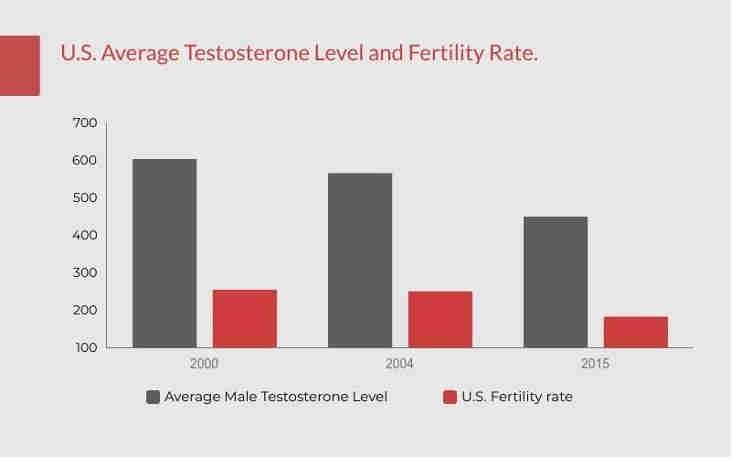
We have curated a society plagued with excess oestrogen. For women, this causes precocious puberty, PCOS, anxiety and mood disorders, metabolic syndromes, psoriasis and dysregulated sleep. For men, it feminises them, reducing total testosterone production, destroying their fertility, increasing their mood disorders, and skyrocketing their risks of stroke and heart attacks.
This oestrogen stew is wreaking havoc on our health and relationships. As we immerse ourselves into this environment of endocrine disruption, we must ask, what can we do to reclaim our health and restore vitality to society?
Thank you.
 Vitality Blueprint
Leave a comment