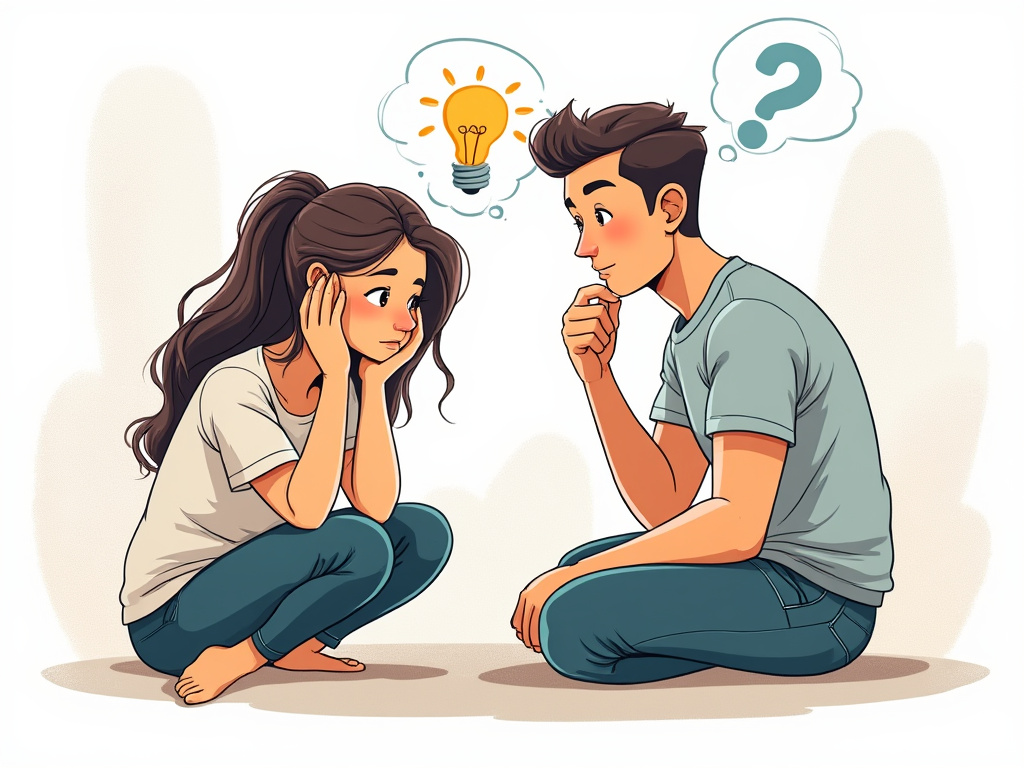
I’m sure that, like me, most people have found themselves in an argument with their partner, frustrated that no matter what you say, you just can’t seem to get through to them. You might both be speaking the same language but are on completely different wavelengths. This is a common experience in all relationships and highlights the subtle yet extremely powerful difference in how men and women process social interactions. While it is easy to blame societal upbringing, it is naive to ignore the overarching causality that is our biology.
The age-old debate of nature versus nurture has long attempted to answer the question: “Are we born this way, or does society mould us into who we become?” When it comes to the differences between men and women, there are a plethora of opinions, most referring to a mixture of our environment and biological processes. However, looking into the neurological side of things, it seems the differences between men and women come far more from their hardwiring than from their experiences. Hormones, brain structure, emotional response, and evolutionary development play a huge role in shaping our intrinsic differences. Yes, in my opinion, we are born this way, and while socialisation has its influence, biology will always take precedence.
The human brain is the highest point of evolutionary complexity, and understanding how male and female brains differ explains the projected distinctions in their reactions to the world.
One of the most fascinating areas of gender research involves the corpus callosum, the bundle of nerve fibres connecting the two hemispheres. Women typically have a much larger corpus callosum than men. This helps promote fluid communication between both sides, leading to multi-task orientation. However, men’s brains are more lateralised, meaning they activate specific regions for each task, which helps increase focus on individual problems.
Another significant difference is in the hippocampus, the brain region tied to memory and emotional response. Due to the influx of oestrogen during female puberty, the hippocampus experiences a vastly enhanced synaptic connection, helping code memories that are associated with emotional experiences. In men, however, the influx of testosterone during puberty has the opposite effect. Men are typically more likely to encode the same memory but without as much emotional attachment, usually recalling event-based details instead of emotional recollection.
As a result of this plasticity, the amygdala is vitally different. Tasked with processing emotions, and closely tied to our hippocampus, the amygdala focuses on survival instincts like fear, aggression, and pleasure. Due to the hormonal influences we experience during puberty, women exhibit greater activity on the left side, and men on the right, resulting in emotions being processed differently. For example, women are more likely to focus on the emotional aspects of a situation, while men focus on the action-oriented parts. Also, due to oestrogen’s effects, women’s amygdalae have a much stronger connection to the hippocampus, suggesting the reason for emotional memory codes. As a result, women tend to show stronger responses to negative stimuli and stress, which might explain why they are more likely to develop stress-related conditions.
On the other hand, due to how testosterone interacts with the male amygdala, men show higher levels of aggression, competitiveness, and impulsivity, leading to higher involvement in criminal activity, risk-taking behaviour, and more addictive personalities.
Further differences are seen in the male temporoparietal junction (TPJ) and female mirror neuron system (MNS). After puberty, the male brain largely blocks out the use of mirroring emotions (MNS) as a survival instinct. It is believed this happens because including emotional responses in problem-solving hinders a man’s ability to act decisively. For this reason, testosterone moves social interactions into the TPJ, a brain area involved with understanding and predicting others’ intentions and behaviours. When people refer to men as “emotionless robots,” this is usually the region they are referring to. It explains why women are seen as more empathetic and emotionally attuned, while men focus solely on solving the issue at hand, rather than offering comfort and understanding.
Additionally, men show higher activation in the dorsal striatum, a brain region tied to goal-directed behaviours. This area is responsible for action planning and decision-making, which may explain why men focus on linearly achieving specific objectives. Women, on the other hand, exhibit stronger activity in the ventral striatum, which is connected to reward processing. This explains why women tend to seek relational and emotional rewards, such as nurturing and social bonds, instead of the tangible rewards men seek.
Finally, women have a heightened pain sensitivity due to greater activity in the insula and anterior cingulate cortex, the regions responsible for processing emotional and subjective experiences of pain. This means that not only do women feel pain more acutely, but they also react with more emotional intensity. This perception likely evolved as a protective mechanism during childbirth and child-rearing, where acute awareness is vital for survival.
These differences are not just theoretical; they manifest in everyday life, often without realisation. When a man and woman argue, the man may focus on solving the problem at hand, while the woman may seek emotional validation and understanding. This distinction can lead to immense frustration, but when working together, the male and female brain is an unstoppable force. The combination of male problem-solving alongside female emotional intelligence creates the perfect piece of machinery, where all parts turn in harmony to produce an unstoppable force.
 Vitality Blueprint
Leave a comment