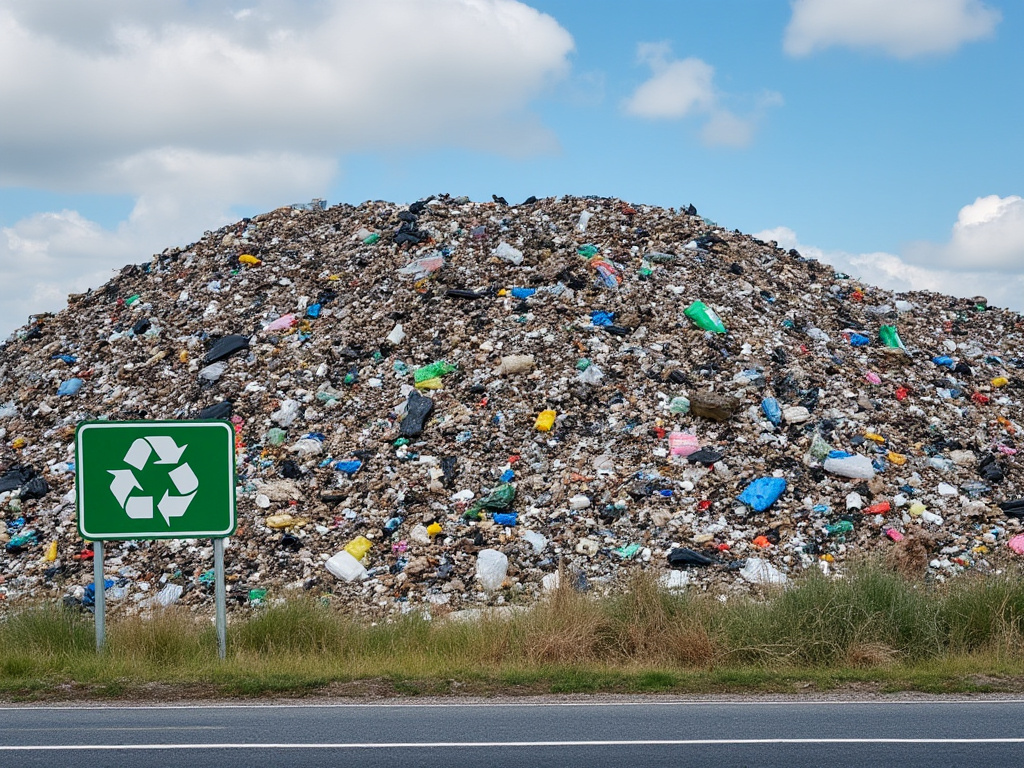
What if I told you that all your recycling efforts have been in vain? You’d probably shrug me off, or completely dispute my claim.
Less than 10% of all plastic ever produced has been recycled. Yes, you read that right: of all the plastic produced on Earth since its adoption in 1907, just under 10% has been recycled. To me, that is an insane number given the worry about environmental and human damage from plastic usage. Just to outline how big this issue is, take these statistics: as of recent years, approximately 460 million metric tonnes of plastic are produced annually, 11 million tonnes are dumped into the ocean, microplastics have been found in every human organ, and we ingest up to 5 grams of microplastics each week, the equivalent of consuming a debit card.
Since the 1990s, formalised recycling efforts have moved further up the agenda. The introduction of stricter regulations, landfill taxes, and waste strategies has promoted recycling across the United Kingdom. As of 2024, almost all local authorities actively promote and enforce high levels of recycling efforts in the name of fighting unnecessary environmental damage.
However, recycling efforts often serve more as a symbol of moral superiority than as a truly effective solution to the plastic crisis.
Since the start of the millennium, the UK’s overall plastic recycling rate hovers at around 44%. Despite these underwhelming efforts, much of what is collected for “recycling” doesn’t end up as new products, which further pulls that number even lower. Instead, a considerable amount of recycled plastic must be incinerated or sent to a landfill due to contamination of the waste. In fact, each year in the UK, more “recycled plastic waste” is incinerated than is actually recycled, the rest is taken to a landfill to degrade over hundreds of years. Many consumers mistakenly believe that the materials they put into their green bins will be repurposed. But, instead, the most that this achieves is a false sense of accomplishment, encouraging the production of harmful produce, instead of swapping to a sustainable practice, like glass, paper and wood.
Specifically, as the UK produces about 5.2 million tonnes of plastic waste per year, this means that approximately 2.2 million tonnes are recycled, 2.6 million are incinerated, and 364,000 tonnes are sent to landfills. But, it doesn’t stop there; of the 43% that is recycled, about 70% (1.5 million tonnes) is downcycled into polyester fiber for clothing, carpeting, and filling materials. This means that if you buy clothing labelled as “polyester” or marketed as “sustainable,” it contains microplastics. As noted in a previous article, the damage that microplastics can do to your body is immense, especially if you are exposed to them continuously.
Thus, it is a fair interpretation to estimate that of all “recycled” plastic in the UK, only about 12% (624,000 tonnes) is effectively recycled. This figure excludes all incineration, landfill usage, and downcycling.
Unfortunately, the misconceptions surrounding recycling don’t stop there. As a result of the incineration of plastic, globally, approximately 17.4 million tonnes of CO₂ is produced. To put that into perspective, this is equivalent to the annual energy usage of 2.1 million homes, the carbon emissions from 3.8 million cars, and the footprint of 87,000 round trips between New York and London.
Furthermore, there is substantial evidence to suggest that the major plastic-producing companies and industry lobbyists, the very entities that curated the recycling movement, were aware of these limitations. Internal documents from some industry members, released during investigative reports, showed that these companies recognised as early as the 1970s that large-scale recycling was economically and technically unfeasible. Even with this information, they proceeded to promote this method of environmental aid to manage public perception of plastic instead of seeking genuine solutions. Ultimately, this led to a skyrocketing amount of plastic used globally, resulting in this industry now being one of the largest in existence.
Personally, the impact on human health is far more important, and a much bigger issue than that of the landfills and incineration. However, the conversation around plastic waste often surrounds itself around the environment alone. Either way, the reality is that our exposure to microplastics currently poses one of the most significant risks to human health.
To combat this situation, we must shift our focus from merely recycling as a means to promote self-moral efficacy to one that prioritises the reduction of plastic consumption.

 Vitality Blueprint
Leave a reply to Nigel Sydes Cancel reply