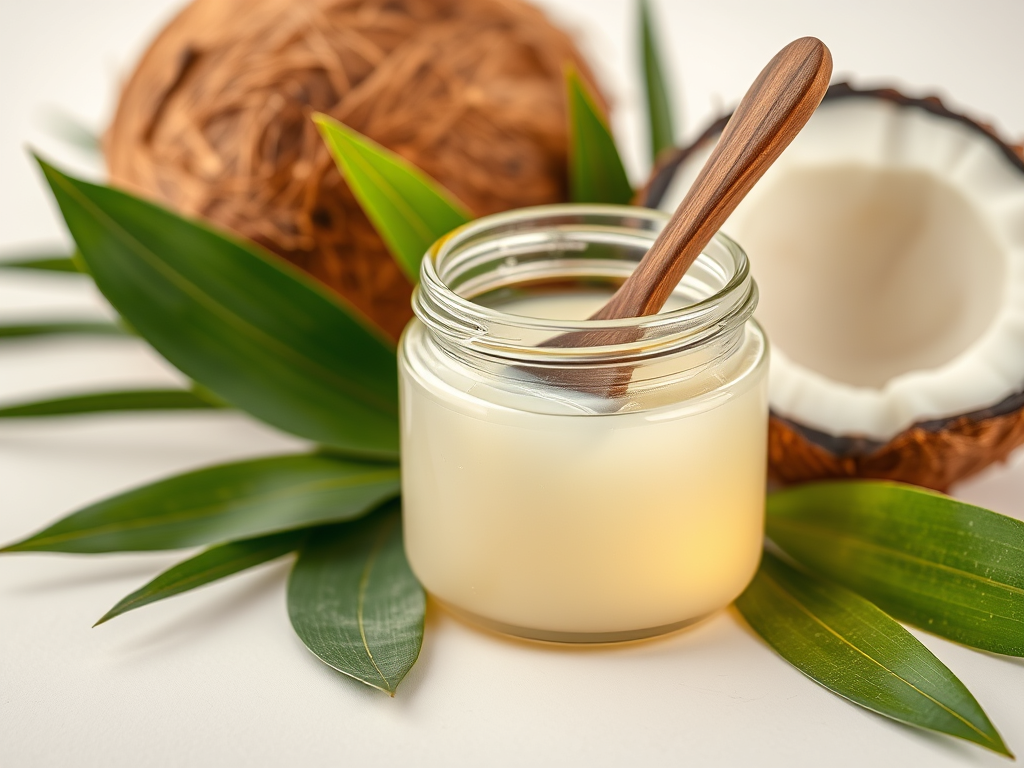
I have mentioned before the dangers of unsaturated fats in articles referencing sunburn and seed oil consumption, but I have rarely mentioned the vitality involved with “excessive” consumption of saturated fats, especially in the form of coconut oil. Firstly, although coconut oil does contain lesser amounts of unsaturated fats, it seems not to pertain to any of the usual toxic effects such as thyroid inhibition, mitochondrial damage, lipid peroxidation, and cancer promotion. One day I may write a book on this topic; in fact, I did start one, but with my constant learning, it became difficult to present a coherent argument. However, the benefit of small pieces like these is that they allow me to learn, present, and hear criticism without the countless hours spent presenting information for which most would put me in the ‘looney-bin’.
Anyway.
Typically, when we eat leftover food, it is stale but not particularly harmful. When eaten, the same oils which are fresh will oxidise at a higher rate when entering the body after being heated. However, when we eat unsaturated fats, this oxidation can lead to the formation of free radicals. Due to their single or double unsaturated bonds (no carbon), they are less stable, making them highly reactive with oxygen, releasing metabolically damaging reactive oxygen species (ROS). In contrast, with coconut oil, this reaction doesn’t occur. Given that coconut oil, the protagonist of today’s story, is less than 1% unsaturated, it contains mainly medium-chain triglycerides (MCTs). However, our “heart-healthy” unsaturated fats consist of long-chain fatty acids, 12-21 carbon atoms long.
Simply put, triglycerides are the primary form of dietary fat we consume, as well as the main storage form within our bodies. Each triglyceride contains fatty acids which are either saturated, monounsaturated or polyunsaturated. Essentially, saturated fats have no double bonds between carbon atoms, typically solid at room temperature (this is where the misconception about blocking arteries originates), and are found in animal fats and some plant oils. The other two types contain either one double bond or two or more double bonds, causing them to remain liquid under most normal circumstances.
Furthermore, these triglycerides consist of three fatty acid chains attached to a glycerol molecule. Typically, they are mixed with a variety of fatty acids; some could be saturated, others poly or monounsaturated. Taking coconut oil, this substance contains two chains of medium-chain, saturated acids, and one long, monounsaturated chain.
When we eat fats primarily made of long-chain fatty acids, they are emulsified in the small intestine. Pancreatic lipase then breaks down the triglycerides, which can then be transported into the bloodstream. However, when consuming MCTs, they are minimally dependent on the small intestine’s bile due to their shorter length and water-solubility. This process bypasses the need for extra enzymes to break down the triglyceride, something heavily involved with long-chain triglycerides (LCTs). Post-breakdown, MCTs enter the liver directly where they can be rapidly metabolised. However, LCTs must enter the lymphatic system before reaching the bloodstream. From there, they’re distributed into body tissue and used for energy.
Once LCTs are delivered to the tissues after being processed in the liver into VLDL (very low-density lipoproteins), they are broken down through beta-oxidation in the mitochondria of cells to produce energy. Due to this process involving the shortening of fatty acids by two carbon units, it eventually causes electrons to be donated for ATP production. Through this electron transport chain, these electrons are transferred, leading to the reduction of oxygen to water. However, if there is an imbalance between ROS production and the body’s antioxidant defence, oxidative stress occurs, increasing the rate of beta-oxidation, and causing cell and DNA damage.
But, due to containing fewer fatty acid chains, MCTs don’t have this issue. Instead of needing their carbon units reduced, they enter a different metabolic pathway where they can bypass the standard beta-oxidation route, leading to no ROS production.
This is where it gets interesting. Due to coconut oil containing mainly MCTs, when it enters the correct pathway, there is no electron leakage into the mitochondria. But, given the LCTs make up a small ratio, our electron transport chain can deal with its reduction in carbon atoms without causing an imbalance, so no ROS is produced. Some say this is due to the antioxidant content of the coconut oil itself, but it is difficult to find a definitive answer.
However, going back to the “heart-healthy” theory, we have evidence showing how unsaturated fats provide an extremely skewed ratio of benefit to iatrogenic effects. For example, when feeding animals linoleic acid, the supposed “essential” fatty acid, it turned out that heart damage was caused. But, this is supposedly due to the heating process seed oils undergo, not the raw acid itself. Furthermore, we have the immunosuppression in patients who were fed intravenous “essential fatty acids”, and the act of ageing itself, especially neurologically, is increased with lipid peroxidation, which we know is a guaranteed part of unsaturated fat consumption.
In contrast, various parts of coconut oil have started being advertised as “drugs” on the market, meaning they are proven to be a disease treatment. For example, we have antimicrobial and anti-fungal treatments, topical oils for psoriasis, ringworm, even Crohn’s disease, and lipid-based drug delivery systems for its antiviral properties.
Finally, we must comment on its metabolic effects, because to me, this is its most interesting function.
It is clear from most animal studies conducted on this substance that it has an anti-obesity effect. Due to the MCTs, this oil can increase your metabolic rate, meaning you burn more calories each day without doing anything different. When a calorie is burned, it goes through a process of thermogenesis, where it is converted into energy. But, when we increase our metabolic rate, it means we dietarily induce thermogenesis at a more rapid rate, so it causes a higher caloric burn rate. Also, due to its rapid metabolisation, they are instantly oxidised for energy instead of being stored as fat, unlike unsaturated or long-chain fatty acids.
Furthermore, MCTs can also activate thyroid hormones, making them much more effective. Due to its mitochondrial enhancements, where thyroid hormones are significant, it can increase the production of TSH. Not only is this hormone used as a precursor to complete energy homeostasis, but it can alleviate symptoms of fatigue, weight gain, and lethargy. Also, this thyroid hormone is vital for growth and development, especially in children and during pregnancy as it affects neurological development, bone growth, and muscle control.
Although I stopped the excessive consumption of unsaturated seed oils and fats months ago, I supposed that this was enough. But during my deep dieting stage, I had to limit my intake to 1500-1700 calories to continue losing body fat (I was around 13% at the time). However, since introducing a tablespoon of coconut oil as a cooking oil, I have seen a huge increase in my energy levels, strength, thirst, hunger, and even weight loss. In the end, I had to increase my calories to around 2200 to sustain the fat loss alongside my hunger levels. It is no understatement to say that I saw an immediate positive response and will be including this within my diet for the foreseeable future. Of course, if I learn some counteracting information that might deter me, then I will reference this article, but if not, assume it has become a staple within my household.
 Vitality Blueprint
Leave a comment